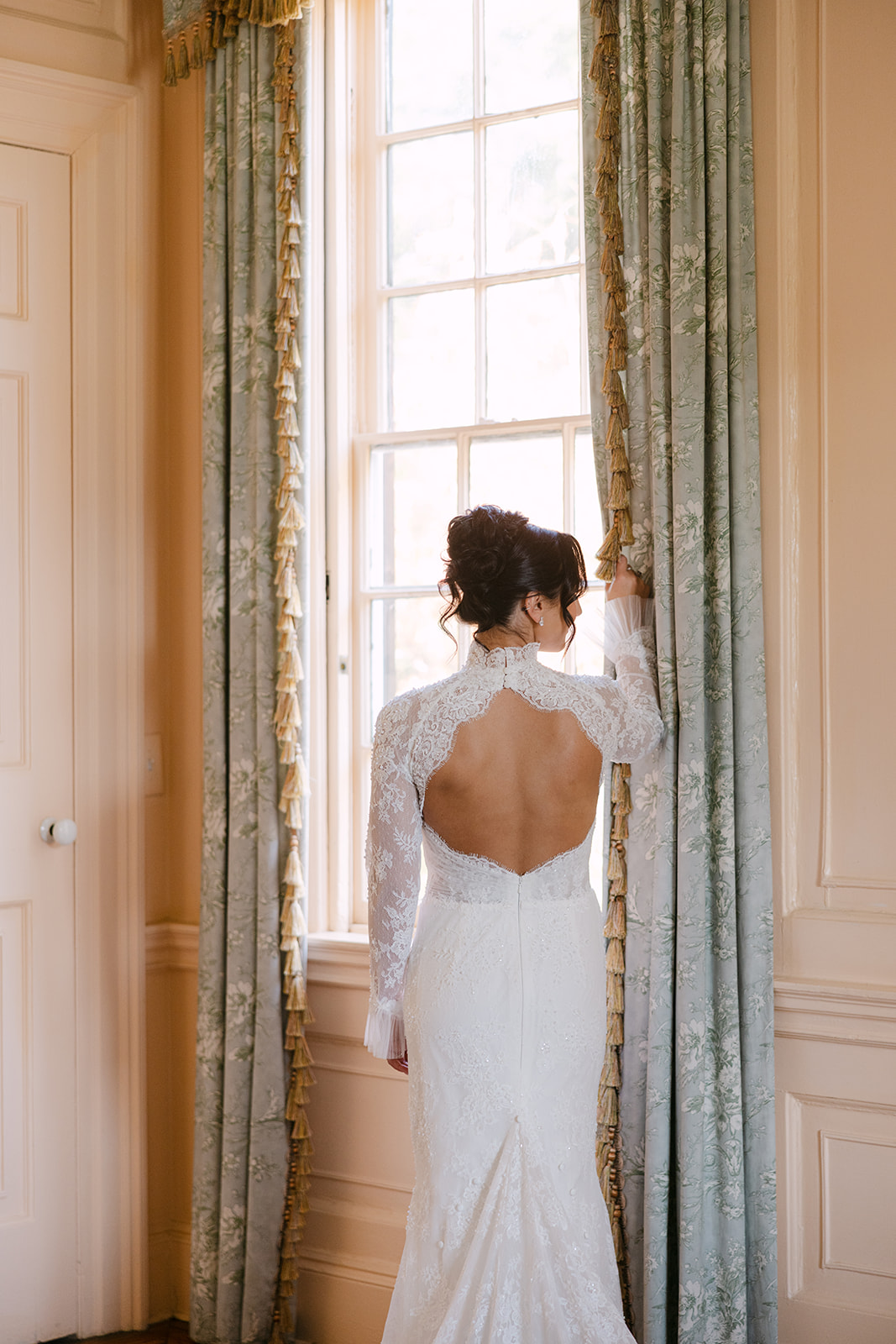
Why bridal alterations are a normal (and wonderful) part of the wedding gown experience!
You finally said yes to the dress. You cried. Your mom cried. The consultant cried. It was a
whole moment!
And then someone mentioned alterations, and suddenly you’re wondering: wait, does
something need to be fixed?
Here’s the short answer: no. Nothing is broken. Alterations aren’t a consolation prize — they’re
the final, essential step that takes a beautiful gown and turns it into your gown. Let’s talk about
why.
Wedding Gowns Are Made for a Mythical Person
Bridal gowns are manufactured in standard sample sizes, typically a bridal size 8 to 24 (which,
just a heads up, runs smaller than regular sizing — fun industry quirk!). They’re designed to fit a
general silhouette so that brides of many shapes and sizes can try them on in the boutique.
But here’s the thing: you are not a standard sample size. You are a real, specific human being
with your own unique proportions — your height, your shoulders, the curve of your waist, the
length of your torso. No dress rolling off a production line is going to account for all of that.
Alterations exist precisely to bridge that gap.
Think of it this way: even the most expensive, perfectly crafted suit or gown in the world still
gets tailored before it’s worn. That’s not a flaw in the garment. That’s just how clothing works.
Alterations are an expected part of the wedding dress process. 99.9% of brides need something done to their gown!
The Most Common Alterations (and Why They’re Completely Normal)
Hemming the length. Unless you happen to be the exact height the designer had in mind —
and wore the exact heel height they assumed — your dress will almost certainly need to be
hemmed. This is probably the single most common alteration, and it makes a massive
difference in how the gown moves and photographs.
Taking in or letting out the bodice. Bodies are not uniform, and bridal sizing has a
notoriously wide range. It’s incredibly common to order a size up to accommodate the fullest
measurement and then have the rest taken in. This is the right approach — it’s much easier to
take in fabric than to add it.
Bustle. If your gown has a train, you’ll need a bustle added so you can actually, you know,
dance at your reception without taking out a row of guests. Bustles come in several styles and
are sewn in specifically for your dress and your preference.
Strap or sleeve adjustments. Straps slip, sleeves gap, necklines gape. These are all fixable
and very routine.
Corset conversion or zipper work. Many brides opt to have a back zipper converted to a
corset back for more flexibility and a customized fit. Others need zipper reinforcement. Totally
normal.
Alterations Are an Investment, Not an Afterthought
We know — you’ve already spent a significant amount on your gown, and the idea of an
additional cost can feel like a surprise. But consider this: alterations are what make the
difference between a dress that looks beautiful on a hanger and a dress that looks like it was
made specifically for you.
A skilled seamstress or tailor working on your gown isn’t just hemming fabric — they’re shaping
the entire silhouette to your body. They’re making sure the waistline hits your waist. That the
neckline lies flat. That the zipper closes without a wrestling match. That you can actually
breathe, sit down, and maybe even eat a little at your own wedding.
That work has real value, and the result is absolutely visible in your photos, your posture, and
the way you feel walking down the aisle.
Plan on budgeting anywhere from $600 to $2000. The price of your wedding gown has nothing to do with what you will pay in alterations. You will only pay for what your exact wedding dress needs.
When Should You Start Thinking About Alterations?
Most bridal gowns are ordered eighteen to twelve months before the wedding, and alterations typically
begin about three to four months out. If you plan on doing bridal portraits, remember to start alterations 3 to months before your portrait date! You’ll usually have three to five fittings — an initial fitting
where the major adjustments are pinned and planned, a second fitting to check the progress
and make refinements, and a final fitting to confirm everything is perfect and take your gown
home.
One important note: try to be at or close to your wedding-day weight before your first fitting.
Minor fluctuations are totally manageable (that’s what a final fitting is for!), but major changes
between fittings can complicate the process.
You Deserve a Dress That Fits You
At Elizabeth Cole Bridal, we believe the dress shopping experience shouldn’t end the moment
you say yes. Getting you into a gown that fits beautifully, moves with you, and makes you feel
completely like yourself — that’s the whole point.
Alterations aren’t a hurdle. They’re the last, loveliest part of the process.
So when someone brings up the hem or the bustle or taking in the back, just smile — because
that means you’re getting closer to the version of your dress that was always meant for you.
Alterations do not happen in the shop, but we have a list of trusted seamstresses/tailors in South Carolina. Alterations are a separate cost and paid directly to the seamstress. They are their own separate business aside from Elizabeth Cole Bridal.
Have questions about alterations or ready to start the process? We’d love to hear from you.
Reach out to the Elizabeth Cole Bridal team in Columbia, SC — we’re here for every step of the journey.